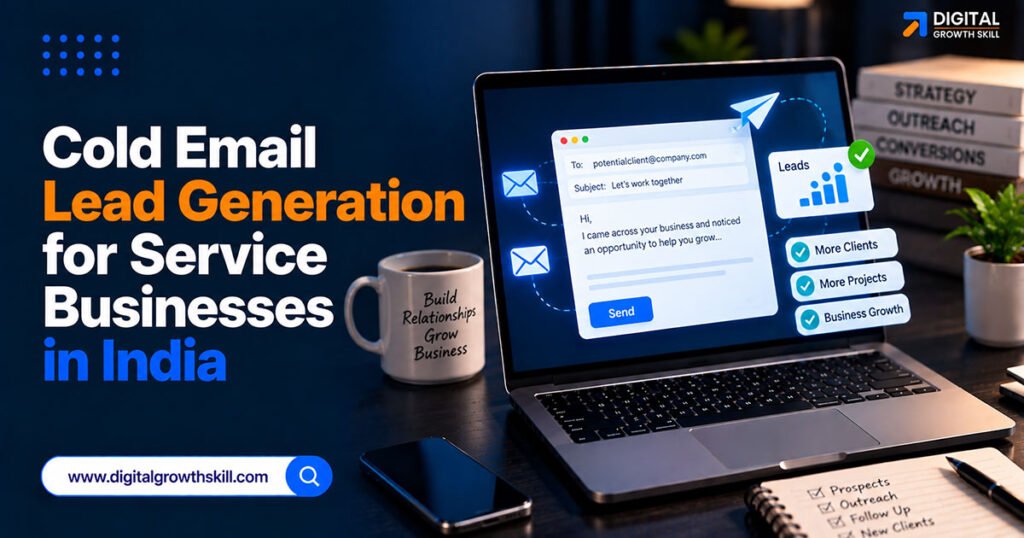
Cold email lead generation for service businesses in India sits in a genuinely more complicated legal and practical space than most guides admit — India’s data protection law now touches even B2B contact details, and most cold emails get deleted in three seconds regardless of the law. This guide covers both: how to send cold email responsibly under India’s evolving rules, and how to actually get a reply once it lands in someone’s inbox. It pairs well with how to generate leads on WhatsApp for small business as a related outbound channel, though the two work very differently.
This is written for agencies, consultants, and service businesses reaching out to other businesses — not for consumer marketing, which has stricter consent requirements. It’s worth distinguishing this from how to build an email list without running ads, which covers opt-in list building rather than outbound outreach to people who haven’t opted in yet.
Quick Answer: Cold email is not illegal for B2B outreach in India, but India’s DPDP Act treats a work email tied to a named person as personal data, so responsible sender practices matter. What actually gets a reply is a short, genuinely researched first line, correct SPF/DKIM/DMARC setup, and a follow-up sequence of three to five emails — not volume or generic templates.
Key Takeaways
- A work email address counts as personal data under India’s DPDP Act, even in a B2B context.
- Deliverability setup (SPF, DKIM, DMARC, domain warm-up) determines whether your email is even seen, before copy quality matters at all.
- Real personalization means referencing something specific and current about the recipient’s business, not inserting a first name into a template.
- Most replies come from a follow-up email, not the first message — plan for three to five touches.
- What a prospect finds when they research you afterward, including through AI tools, increasingly affects whether they reply — this is where AEO, AIO, and GEO become relevant to outbound sales.

Is Cold Email Legal for B2B in India?
Cold email for B2B outreach is not illegal in India, but it is not unregulated either. There’s no single Indian law written specifically for cold email, unlike CAN-SPAM in the US.
India’s Digital Personal Data Protection Act does apply to B2B contact information, since a work email tied to a named individual counts as personal data — a common misconception among sales teams is that professional contact details sit outside privacy law entirely. The Act’s substantive obligations are being phased in, with full enforcement expected by May 2027, so the compliance picture is still settling.
In practice, that means: use a legitimate business reason for reaching out, identify your business clearly, include a genuine way to opt out, and don’t scrape or buy databases of dubious origin. Treat this as a “prepare now” area rather than a solved one, and get specific legal advice if cold email is central to your growth strategy.
What Makes a Cold Email Actually Get Read?
The subject line and first line decide whether an email gets opened at all — most cold emails fail before the body copy is ever read. A short, specific, non-salesy subject line consistently outperforms anything that sounds like a mass campaign.
Keep the email itself short. A prospect skimming on their phone between meetings isn’t going to read six paragraphs about your company history — lead with something relevant to them, not your service list.
How Do You Personalize Cold Email Beyond a First Name?
Real personalization references something specific and true about the recipient’s business, not a mail-merge field. Inserting {first_name} into a template isn’t personalization anymore; every recipient has seen that trick.
| Personalization Level | Example | Effort |
|---|---|---|
| Generic | “Hi {first_name}, hope you’re well” | None |
| Basic | Mentions their industry or city | Low |
| Genuine | References a specific, recent detail about their business | Higher, but converts better |
One well-researched line at the top of an email usually outperforms an entire templated paragraph further down.
What Are the Deliverability Basics Before Sending Cold Email?
Set up SPF, DKIM, and DMARC records correctly before sending any cold outreach, or nothing else in this guide matters. Use a separate sending domain from your primary business domain to protect your main domain’s reputation if something goes wrong.
Warm up a new sending domain gradually over a few weeks rather than sending high volumes immediately — mailbox providers flag sudden spikes from unfamiliar domains as suspicious behavior. Keep your send volume per inbox modest and spread across multiple sending addresses if you’re reaching a larger list.
How Often Should You Follow Up on Cold Email?
Most replies to cold email come from a follow-up, not the first message. A cadence of three to five emails spaced several days apart, each adding a slightly different angle rather than just “just following up,” performs noticeably better than a single attempt.
Stop after a reasonable number of touches if there’s no response — persistence past that point reads as pressure rather than genuine interest, and tends to hurt reply rates on future attempts to the same contact.
Which Cold Email Tools Are Worth Knowing?
Cold email tooling splits into three jobs: finding contacts, sending and warming up domains, and managing sequences. Prospecting databases find contact details; dedicated sending platforms handle domain warm-up; outreach or CRM tools manage sequences and replies.
Some platforms, like Apollo, Instantly, Smartlead, and Lemlist, combine more than one of these functions — evaluate based on which specific job you need solved rather than picking the most-mentioned name. If you’re also running opt-in campaigns, it’s worth keeping cold outreach tooling separate from what you use for email marketing for coaches and course creators or similar nurture-focused audiences, since the sending practices differ.
How Do AEO, AIO, and GEO Support Cold Outreach?
Cold email gets the first click, but what a prospect finds when they check you out afterward often decides whether they reply — and that’s increasingly shaped by AI tools, not just Google. Most recipients now search your name or company before responding, sometimes through an AI answer rather than a traditional search result.
If your website content is structured with clear, extractable answers (Answer Engine Optimization), positioned to appear in Google’s AI-generated summaries (AI Overview Optimization), and consistently described the same way across your site and profiles so tools like ChatGPT or Perplexity can confidently describe your business (Generative Engine Optimization), a prospect’s quick background check reinforces your credibility instead of leaving them uncertain. The same content foundation that supports our local SEO checklist for small businesses in India also supports this.
What Are Common Cold Email Mistakes in India?
Sending the same generic pitch to a scraped or purchased list is the most damaging habit — it hurts deliverability for every future campaign and now carries real compliance risk under DPDP. Overloading the first email with every service you offer, instead of one clear reason to reply, is another frequent mistake that buries the actual ask.

Frequently Asked Questions
Q1. Is cold email illegal in India?
Not illegal outright for B2B outreach, but it isn’t unregulated either — India’s DPDP Act treats a work email tied to a named person as personal data, and enforcement is being phased in through 2027. Responsible sender practices now reduce risk later.
Q2. How many follow-ups should a cold email sequence include?
Three to five, spaced several days apart, tends to work well. Most replies come from a follow-up rather than the first email.
Q3. Do I need a separate domain for cold email?
Yes, generally recommended — it protects your main business domain’s reputation and deliverability if a sending domain gets flagged or blacklisted.
Q4. Can AI search visibility actually help a cold email campaign?
Indirectly, yes. It won’t get the email opened, but it can influence whether a prospect trusts what they find when they look you up afterward, which affects whether they reply.
Q5. What’s the biggest reason cold emails get ignored?
Generic, unpersonalized pitches that clearly went to hundreds of recipients at once. A short, specific, genuinely relevant first line is what separates a reply from a delete.
Conclusion
Cold email lead generation for service businesses in India works when it’s treated as a craft, not a numbers game — genuine personalization, solid deliverability setup, a realistic follow-up cadence, and, increasingly, a web presence built for how prospects research you before replying. Layer in careful attention to India’s evolving DPDP requirements rather than ignoring them, and cold email remains a viable channel for service businesses willing to do it properly instead of chasing shortcuts.