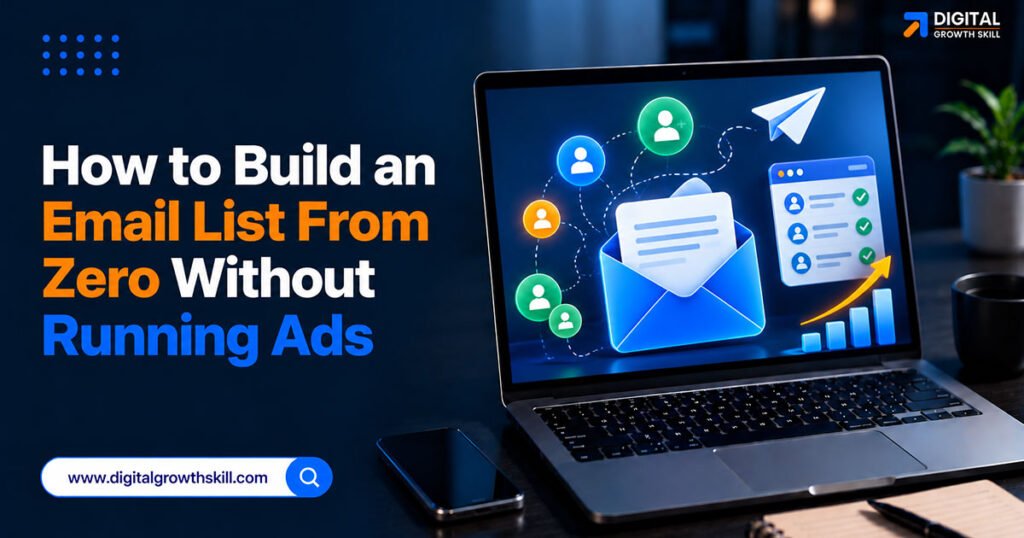
How to Build an Email List From Zero Without Running Ads comes down to one uncomfortable truth: it takes longer than a paid campaign, but the subscribers you earn tend to be more genuinely interested, since nobody signed up because of a targeted ad they half-noticed. This guide walks through the organic tactics that actually work, how to stay on the right side of India’s data protection rules, and how to make your list-building content visible to both search engines and AI answer tools. Once you have a list forming, it’s worth comparing free email marketing tools for small business in India to find the right platform to actually send to it.
None of this requires a marketing budget — it requires a lead magnet worth having, consistent placement, and patience.
Start With a Lead Magnet Worth Trading For
Nobody hands over their email for a generic “subscribe to our newsletter” button anymore. A lead magnet needs to solve one specific, immediate problem, not offer vague future value.
A checklist, a template, a short how-to guide, or a discount code for a first purchase all work better than “exclusive updates,” because the reader knows exactly what they’re getting in exchange for their inbox.
| Lead Magnet Type | Works Well For |
|---|---|
| Checklist or template | Service businesses, B2B |
| Discount or coupon code | Retail, ecommerce |
| Free mini-course or guide | Coaching, education |
| Early access or waitlist | New product launches |

Place Opt-Ins Where Attention Already Exists
Your highest-traffic pages deserve an opt-in form, not just your homepage. Add one to your most-visited blog post, your about page, and any page where someone has already spent more than a few seconds reading.
A content upgrade — a downloadable version of the exact article someone is reading — tends to convert better than a generic sitewide popup, since it matches what the reader is already interested in at that exact moment.
Turn Existing Content Into a List-Building Engine
If you’re already publishing blog content for SEO, that content is your cheapest list-building channel, since the traffic is already organic and free — the same organic traffic our local SEO checklist for small businesses in India is designed to help you earn. Every article you publish should have at least one clear, relevant place to subscribe, not just a form buried in the footer.
Repurpose your best-performing articles into a short email series — this gives new subscribers an immediate reason to stay subscribed rather than going quiet after the welcome email.
Build Through Communities, Not Just Your Website
A lot of list growth in India happens outside your own website entirely. WhatsApp and Telegram communities, niche Facebook groups, and local business associations are places where trust is already established — sharing something genuinely useful there, with a link back to a specific lead magnet, tends to outperform cold outreach. This works especially well alongside AI tools for WhatsApp Business marketing, since you’re often already messaging these same contacts.
Partnering with a complementary (non-competing) business to cross-promote each other’s list — a bakery and an event planner, for instance — is another underused, entirely free tactic.
Capture Emails Offline Too
If you run a physical shop, clinic, or event stall, a QR code linking directly to a simple signup form captures emails from people already standing in front of you, which converts far better than asking them to remember your website later. Keep the offline form short — name and email only.
Respect Consent From the Start: DPDP Act Basics
India’s Digital Personal Data Protection Act requires explicit, informed consent before you collect and use someone’s email for marketing, and pre-checked signup boxes don’t count as valid consent. This isn’t just a legal formality — building your list this way from day one avoids a costly cleanup later.
Practical basics: use a clear opt-in checkbox someone actively ticks, state plainly what you’ll send and how often, include an easy one-click unsubscribe on every email, and keep a record of when and how each person opted in.
Attracting Subscribers Through AI Search: AEO, AIO, and GEO
Search itself is changing, and it’s worth building your organic list-growth content with this in mind. AEO (Answer Engine Optimization) structures content so it can be pulled out and shown as a direct answer — clear question headings followed immediately by a concise answer work best. AIO (AI Overview Optimization) refers more specifically to earning a spot inside Google’s AI-generated summary at the top of search results. GEO (Generative Engine Optimization) is the broader effort to get your brand mentioned or cited by tools like ChatGPT, Perplexity, and Gemini when they generate longer answers.
These terms are used somewhat inconsistently across the industry, but the practical overlap is high: write content with clear, extractable answers, keep your business details (name, services, contact information) consistent everywhere online — including your Google Business Profile optimization guide — and build genuine topical authority in your niche rather than chasing keywords. A reader who finds your lead magnet through an AI-generated answer is still a free, organic subscriber.
Common Mistakes to Avoid
Asking for too much information on a signup form — name, phone, company, and email all at once — quietly kills conversions; start with just an email address and ask for more later if needed. Another common mistake is going quiet after the first welcome email, which wastes the trust you worked to earn.

Frequently Asked Questions
Q1. How long does it take to build a meaningful email list without ads?
It varies by niche and how much existing traffic or community presence you have, but most businesses see steady, compounding growth over three to six months of consistent effort rather than a quick spike.
Q2. Is a lead magnet always necessary?
Not strictly, but conversion rates are noticeably lower without one. A newsletter with a genuinely clear value proposition can work too, if you’re specific about what subscribers will actually receive.
Q3. Do I need consent management software to comply with the DPDP Act?
Not necessarily for a small list — a clear opt-in checkbox, a documented consent record, and an easy unsubscribe link cover the basics. Larger businesses handling significant volumes of personal data should look into dedicated consent tools as compliance deadlines approach.
Q4. What’s the difference between AEO and GEO in simple terms?
AEO focuses on getting a specific piece of content extracted as a direct answer. GEO is the broader goal of your brand being mentioned or recommended when an AI tool generates a longer, synthesized response.
Q5. Can WhatsApp groups really help grow an email list?
Yes, when you’re sharing something genuinely useful rather than just self-promoting. A helpful post with a link to a specific lead magnet tends to convert better in a trusted community than the same message sent cold.
Conclusion
Building an email list without running ads works when you combine a genuinely useful lead magnet, opt-ins placed where attention already exists, and organic channels — your own content, communities, and increasingly, AI-generated answers — instead of paid reach. Layer in proper consent practices from the start under the DPDP Act, and you’ll have a list that’s both compliant and made up of people who actually want to hear from you, which tends to perform better than a larger, less engaged one built on shortcuts.