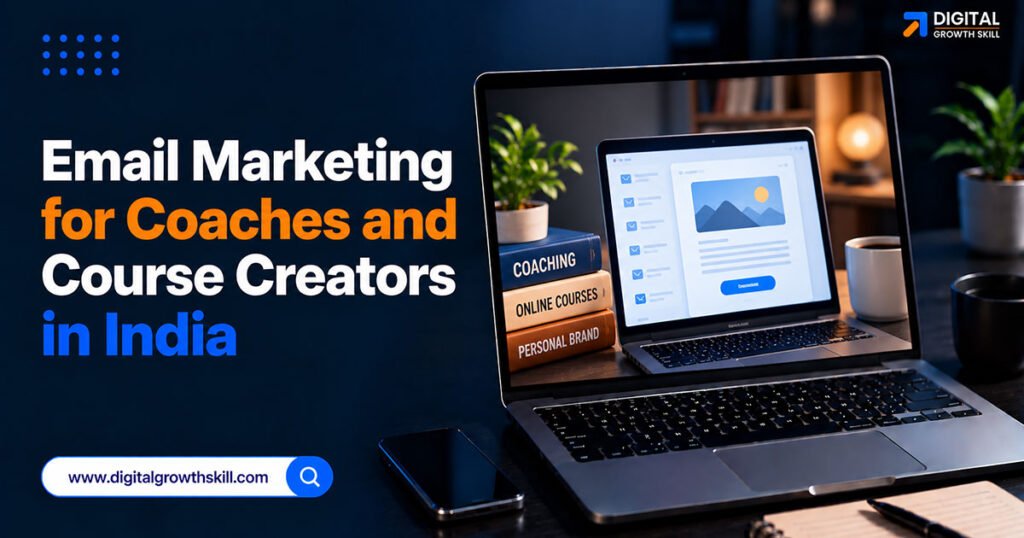
Email marketing for coaches and course creators in India works differently than it does for a retail business, because you’re not selling a product once — you’re building trust over weeks before someone commits to working with you or buying a course. Social media reach fluctuates with algorithm changes; your email list doesn’t. Before any of this works, though, you need a list to begin with — if you’re starting from scratch, see how to build an email list without running ads first.
This guide covers the specific email sequences coaches and course creators need, how to segment a list around course interest rather than generic demographics, and how to make your content visible to AI search tools as well as traditional search. If you run a coaching institute rather than an individual practice, it’s worth pairing this with AI tools for coaching institutes for the broader operational picture.
Why Email Matters More for Coaches Than Social Media
A coaching sale or course enrollment rarely happens on first contact. Email lets you nurture that decision over days or weeks without depending on a platform’s algorithm deciding who sees your content. A follower who never opens Instagram again is gone; a subscriber stays reachable until they unsubscribe. It works well as a complement to AI tools for WhatsApp Business marketing, since the two channels reach students at different points in the same decision.
This matters even more in India’s crowded coaching and course space, where trust and consistency, not just content quality, are what separate a coach a stranger buys from versus one they keep scrolling past.

The Core Email Sequences Every Coach Needs
Most successful coaching and course email systems run on a handful of distinct sequences, each with a different job:
| Sequence | Purpose | Typical Trigger |
|---|---|---|
| Welcome sequence | Build initial trust, set expectations | New subscriber joins |
| Nurture sequence | Share value, establish authority | Ongoing, weekly or biweekly |
| Launch sequence | Convert interest into enrollment | Cart opens for a course/offer |
| Onboarding sequence | Reduce refunds, boost completion | Student enrolls or pays |
| Re-engagement sequence | Win back inactive subscribers | No opens in 60–90 days |
Running all five doesn’t require complex software — most email tools with basic automation can handle this, once you know which sequence to build first.
Segmenting by Course Interest, Not Just Demographics
Generic segmentation by age or location matters far less than segmenting by what someone has actually shown interest in. Someone who downloaded a free social media checklist should get different emails than someone who attended a live webinar on paid ads.
Tagging subscribers by the specific lead magnet or webinar they engaged with lets you send relevant follow-up instead of one generic broadcast to everyone. This alone tends to lift both open rates and course conversions, since the content actually matches what the person asked for.
Launch Sequences: Open Cart to Close Cart
A launch sequence typically runs five to seven emails across the days a course or program is open for enrollment — starting with value and social proof, moving through addressing common objections, and closing with a clear final-hours reminder.
Genuine urgency (an actual closing date) converts better than manufactured scarcity, and it protects your credibility long-term. Avoid fake countdown timers or “only 2 seats left” claims that reset every time someone visits your page — subscribers notice, and it damages trust with exactly the audience you’re trying to build a long-term relationship with.
Keeping Students Engaged After They Enroll
The email relationship doesn’t end at checkout. An onboarding sequence that walks a new student through their first steps in the course meaningfully reduces refund requests and improves completion rates, since confused or overwhelmed students are the ones most likely to ask for their money back.
Once a student finishes or makes real progress, a well-timed email asking for a testimonial or review captures social proof for your next launch, while the experience is still fresh.
Choosing a Tool and Staying Consent-Compliant
For a coach with a single course and a modest list, a tool like Kit (formerly ConvertKit) or Zoho Campaigns handles sequences and basic segmentation well on a free or low-cost plan — see our free email marketing tools for small business in India comparison for the current free-plan limits. Larger, multi-course businesses eventually need something with conditional automation, like ActiveCampaign, once launch logic gets more complex.
Whichever tool you choose, collect consent properly under India’s DPDP Act — a clear opt-in checkbox, a stated purpose, and an easy unsubscribe link on every email, not a pre-checked box buried in a signup form.
Making Your Content Visible to AI Search: AEO, AIO, and GEO
Coaches researching “how to grow an email list” or “best online course platform” increasingly get answers directly from AI tools before they ever click a website. AEO (Answer Engine Optimization) means structuring your blog content and FAQs with clear question headings and concise answers underneath, so they can be extracted directly. AIO (AI Overview Optimization) refers specifically to earning a place in Google’s AI-generated summary box. GEO (Generative Engine Optimization) is the broader effort to get mentioned when tools like ChatGPT or Perplexity generate a longer answer about coaching or course platforms.
For a coach, this means writing content around the actual questions your ideal student is asking, keeping your name, niche, and credentials consistent across your website, social profiles, and course platform listings, and building genuine authority in one specific coaching niche rather than trying to cover everything.
Common Mistakes Coaches Make With Email
Selling too aggressively before providing real value is the most common one — a list that only ever hears about your latest offer tunes out quickly. Buying email lists is another, since it violates consent requirements and typically produces poor engagement and spam complaints anyway.
Not segmenting at all, and sending every subscriber the identical broadcast regardless of what they’ve shown interest in, quietly caps how well any of these sequences perform.

Frequently Asked Questions
Q1. How often should a coach email their list?
Weekly to biweekly nurture emails work well for most coaches — frequent enough to stay top of mind, infrequent enough to avoid fatigue. Launch periods naturally increase frequency for a short window.
Q2. Do I need a big list to make money with email as a coach?
Not necessarily. A smaller, well-segmented, engaged list of genuinely interested subscribers typically converts better than a large, cold, unsegmented one.
Q3. What’s the difference between AEO, AIO, and GEO for a coaching business?
AEO focuses on structuring a specific piece of content to be extracted as a direct answer. AIO targets Google’s AI Overview summary specifically. GEO is the broader goal of being mentioned by AI tools like ChatGPT when they generate longer responses about your niche.
Q4. Should I use urgency in my launch emails?
Genuine urgency, like a real closing date, works and is honest. Fabricated urgency — fake countdowns or scarcity that resets — tends to damage trust with the same audience you’re trying to build long-term.
Q5. Is email marketing still relevant given how much coaches use Instagram and WhatsApp?
Yes — email complements rather than replaces these channels, since it’s the one list you fully own and can reach without depending on a platform’s algorithm or policy changes.
Conclusion
Email marketing for coaches and course creators in India works best as a system, not a single newsletter — a welcome sequence to build trust, ongoing nurture content, a genuine launch sequence, and onboarding that keeps students engaged after they pay. Layer in proper DPDP consent practices and content built for how people are increasingly searching through AI tools, and your email list becomes a durable asset that keeps working long after any single social media post has faded from view.