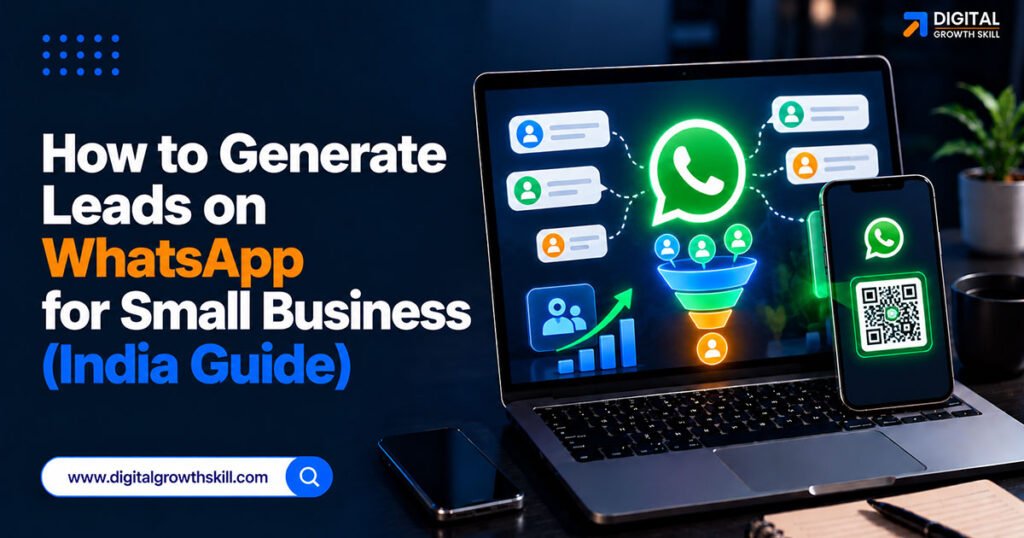
How to Generate Leads on WhatsApp for Small Business (India Guide) comes down to one shift in thinking: stop treating it as a broadcast channel and start treating it as the place a genuinely interested prospect starts a conversation with you. With WhatsApp being the default messaging app for most of India, a well-set-up business profile often converts better than a contact form nobody fills out. This applies just as much to a coaching institute or tuition centre as it does to a retail shop.
This guide covers the free and low-cost ways to turn WhatsApp into a real lead source, what to avoid, and how to stay compliant with India’s data protection rules while doing it.
Start With a Profile Worth Messaging
Before any lead generation tactic works, your WhatsApp Business profile needs to look like a real, active business, not a personal number someone stumbled onto. Complete your business description, hours, address or service area, and category.
Upload your catalog if you sell products or clearly defined services — many customers browse a catalog before ever sending a message, and it answers basic questions before a conversation even starts.
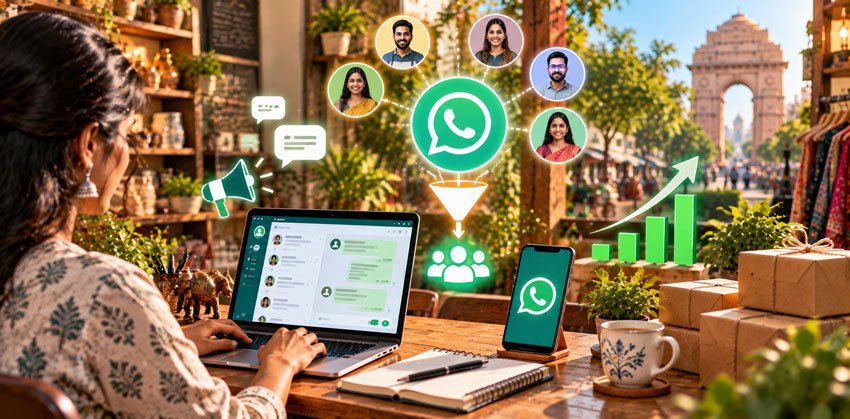
Make It Effortless to Start a Chat
The single biggest lever for WhatsApp lead generation is reducing the number of steps between someone finding you and messaging you.
| Method | Where It Works Best | Cost |
|---|---|---|
| Click-to-chat link (wa.me) | Website, Instagram bio, email signature | Free |
| QR code | Physical shop, print materials, events | Free |
| Google Business Profile WhatsApp link | Local searches | Free |
| Click-to-WhatsApp Ads (Meta) | Instagram/Facebook audiences | Paid |
A click-to-chat link with a prefilled message (“Hi, I’m interested in [service]”) removes the awkwardness of typing a first message, which measurably increases how many visitors actually follow through. If your Google Business Profile is set up properly, its WhatsApp link is one of the easiest of these to add — see our local SEO checklist for small businesses in India for the full profile setup.
Respond Fast, or Automate the First Reply
Speed is one of the few genuinely undisputed facts about WhatsApp lead generation — a prospect who messages five businesses will usually go with whichever one replies first. If you can’t monitor WhatsApp constantly, set up an automated greeting message acknowledging the enquiry and setting a response expectation. For a fuller comparison of automation options, see AI tools for WhatsApp Business marketing.
For businesses using the WhatsApp Business API, a simple rule-based chatbot can handle the first exchange — confirming interest, asking one or two qualifying questions, and flagging the conversation for a human once it’s clear the lead is serious.
Qualify Before You Chase
Not every WhatsApp enquiry is a real lead. Asking one or two direct questions early — budget range, timeline, or specific service needed — helps you spend follow-up time on people actually close to a decision, rather than treating every message as equally urgent.
WhatsApp Flows, available through the Business API, let larger businesses build a short in-chat form for this, but a small business can do the same thing manually with two or three quick questions typed into the chat.
Use Broadcasts and Status Updates for Existing Contacts
Once someone has messaged you and opted in, a broadcast list lets you follow up with relevant updates — new stock, an offer, a seasonal reminder — without starting a fresh conversation each time. This only works ethically and effectively with people who’ve actually opted in, not a purchased or scraped contact list.
WhatsApp Status updates, visible to your existing contacts, are another free, underused way to stay visible between direct conversations.
Staying Compliant Under the DPDP Act
Collecting a phone number is collecting personal data, and India’s DPDP Act applies to it the same way it applies to an email address. Only collect a number when someone has clearly, actively opted in — a click-to-chat link they initiated counts; a number added to your contacts from a purchased list does not.
Be transparent about why you’re messaging, and stop messaging anyone who asks you to.
Practices to Avoid Entirely
A few tactics show up repeatedly in WhatsApp marketing content and are worth actively avoiding. Scraping phone numbers from WhatsApp groups, or buying bulk contact lists, violates both WhatsApp’s terms of service and India’s consent requirements — beyond the legal risk, numbers gathered this way convert poorly and generate spam complaints that can get your business number banned.
Sending unsolicited bulk messages to numbers that never opted in carries the same risk, regardless of how cheap the messaging service claims to be.\

Frequently Asked Questions
Q1. Is WhatsApp lead generation free for a small business?
The core tactics — a complete profile, a click-to-chat link, QR codes, and manual follow-up — cost nothing. Paid options like Click-to-WhatsApp Ads or the Business API with automation add cost as your volume grows.
Q2. Do I need the WhatsApp Business API to generate leads?
No. The free WhatsApp Business app covers most small business needs — profile, catalog, basic automated replies, and broadcast lists. The API becomes worth it once you need chatbots, WhatsApp Flows, or CRM integration at scale.
Q3. How fast should I respond to a WhatsApp enquiry?
As fast as realistically possible. Prospects frequently message more than one business at once, and response speed is one of the more consistently cited factors in who actually gets the sale.
Q4. Is it legal to buy a WhatsApp number database in India?
No, not for marketing purposes. Messaging numbers without genuine consent violates the DPDP Act’s consent requirements and WhatsApp’s own policies, and risks your business account being banned.
Q5. Can WhatsApp replace a website for lead generation?
For some small, local, or service businesses, largely yes — a catalog and a responsive chat can cover most of what a simple website would. Businesses needing SEO visibility or more detailed content still benefit from a website alongside WhatsApp.
Conclusion
Generating leads on WhatsApp for a small business in India comes down to a genuinely simple formula: make it effortless to start a chat, respond fast, qualify before chasing, and only message people who’ve actually opted in. The tactics that promise shortcuts — scraped numbers, purchased lists, bulk blasting — tend to backfire through bans and complaints, while a straightforward, consent-respecting setup keeps working quietly in the background for as long as your business needs it. It pairs well with organic channels too, like how to build an email list without running ads, so you’re not relying on a single platform for every lead.