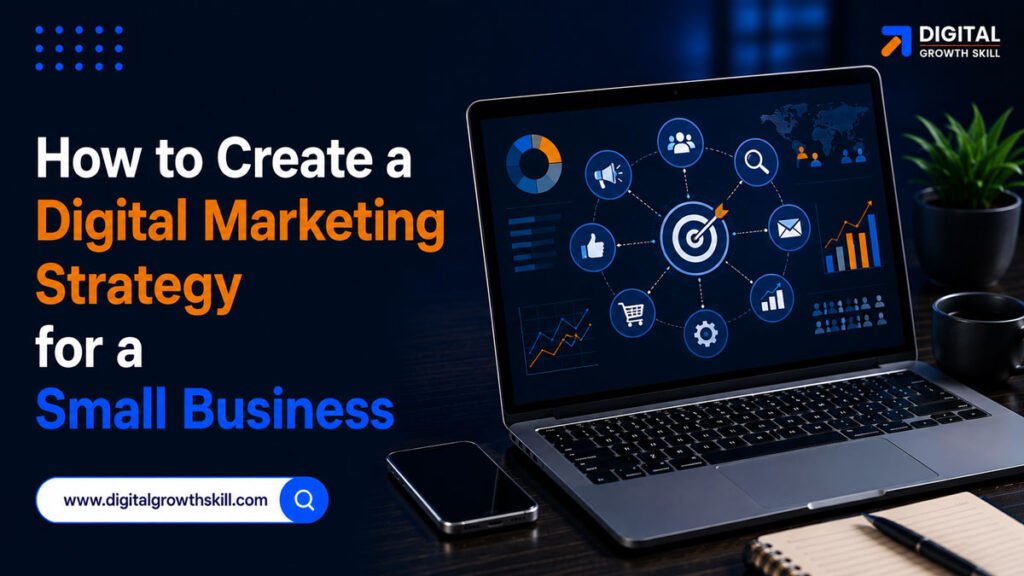
When talking about creating a digital marketing strategy for a small business in 2026, this is really about choosing the right online channels to reach customers, generate leads and increase sales. Small businesses no longer need to be active on every platform. A focused strategy based on the target audience, business goals and available budget can deliver better results.
The digital marketing landscape is also changing with AI-powered search, automation and smarter advertising platforms. Google says its AI Search experiences are built on the same core ranking and quality systems as traditional Search, making strong SEO and helpful content important for businesses.
Advantages of a Digital Marketing Strategy for Small Businesses
- Better use of marketing budgets
- Increased online visibility
- More qualified leads
- Improved customer engagement
- Easier performance tracking
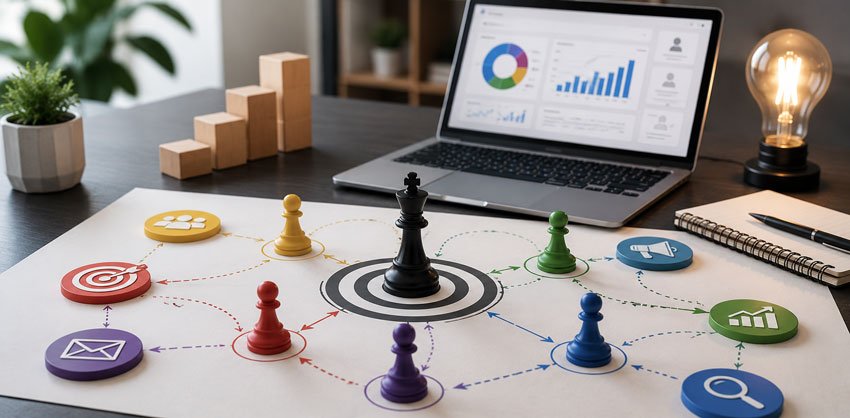
Below are the best steps to create a digital marketing strategy for small businesses in 2026 & beyond –
1. Define Your Target Audience and Goals
The first step is to understand exactly who you want to reach. Identify your ideal customers, their problems, buying behaviour, location and the platforms they use to find products or services.
Next, set measurable goals such as generating leads, increasing online sales, getting more calls or improving brand awareness. Clear goals help you decide which marketing channels deserve your time and budget.
2. Build a Strong Online Presence
Your business should have a clear online presence before investing heavily in advertising. Start with a professional, mobile-friendly website and a properly completed Google Business Profile if you serve customers locally.
Include accurate business information, services, contact details, photos, reviews and clear calls-to-action. Google Business Profile is becoming even more relevant as Google’s ecosystem connects business information with Search and newer AI-powered experiences.
3. Focus on SEO and AI Search
SEO remains an important part of a small business digital marketing strategy. Create useful content around the questions your customers search for and optimize important pages around relevant keywords and search intent.
AI-powered search is also changing how people discover information. Google states that its AI features retrieve information from the existing Search index, meaning businesses should continue focusing on helpful, high-quality content and strong SEO fundamentals rather than looking for separate AI ranking tricks.
4. Use Social Media and Paid Advertising
Choose social media platforms based on where your customers actually spend their time. For many businesses, platforms such as Instagram, Facebook, YouTube or LinkedIn can help build awareness, demonstrate expertise and generate enquiries.
Paid advertising can be added when you want faster results. Google Ads can target people actively searching for products and services, while Meta Ads can help businesses reach relevant audiences through Facebook and Instagram. Start with a manageable budget and increase spending based on actual conversions.
5. Track Results and Improve Your Strategy
Digital marketing becomes more effective when you measure what is actually producing business results. Track website traffic, leads, sales, cost per lead, conversion rates and advertising returns instead of focusing only on likes or impressions.
Review your performance regularly and identify which channels are generating the best results. Small businesses should avoid trying to manage every marketing channel at once; current small-business guidance increasingly recommends focusing on a few channels that closely match the customer journey and business model.
Why Small Businesses Have to Create a Digital Marketing Strategy in 2026
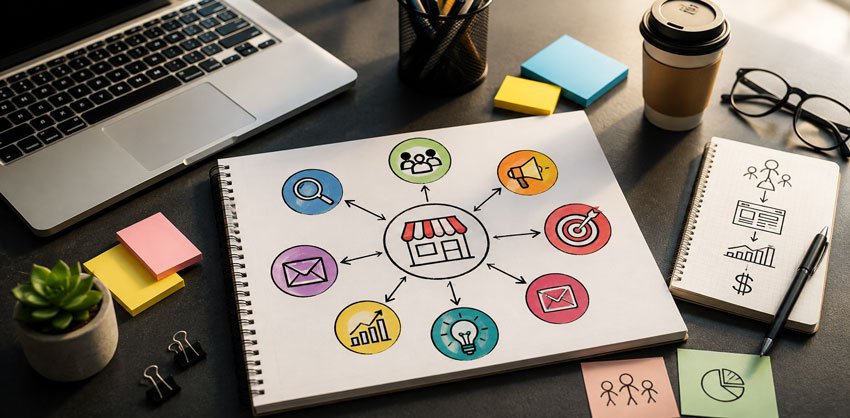
Small businesses often have limited budgets and resources, making it important to spend marketing money carefully. A clear strategy helps businesses decide where to invest, what content to create and which channels should be prioritized instead of randomly posting or running advertisements.
AI is also making digital marketing more accessible to small businesses. Google highlights how AI can help small businesses with everyday workflows, while new Gemini features can connect with business information and help organize business tasks and content.
Conclusion
Creating a digital marketing strategy for a small business in 2026 starts with understanding your customers and setting clear goals. From building a strong online presence and improving SEO to using social media, paid advertising and AI tools, every activity should have a clear purpose.
Small businesses do not need to be everywhere. Start with the two or three channels that are most relevant to your customers, measure the results and gradually expand what works. A focused and consistent strategy can create sustainable online growth without wasting valuable time and money.
FAQ
Q1. What is a digital marketing strategy for a small business?
A digital marketing strategy is a structured plan for using online channels such as SEO, social media, paid advertising, content and email marketing to achieve specific business goals.
Q2. Which digital marketing channel is best for small businesses?
There is no single best channel for every business. SEO, Google Business Profile, social media, Google Ads and Meta Ads can all be effective depending on the target audience and business model.
Q3. How much should a small business spend on digital marketing?
There is no fixed budget. Start with an affordable amount, measure conversions and gradually increase investment in channels that generate profitable results.
Q4. Is SEO still important for small businesses in 2026?
Yes. Google continues to emphasize foundational SEO and helpful content for its AI-powered Search experiences.
Q5. Can AI help small businesses with digital marketing?
Yes. AI can assist with content creation, research, customer communication, campaign planning and repetitive marketing tasks, while business owners should continue providing strategy and human judgment.