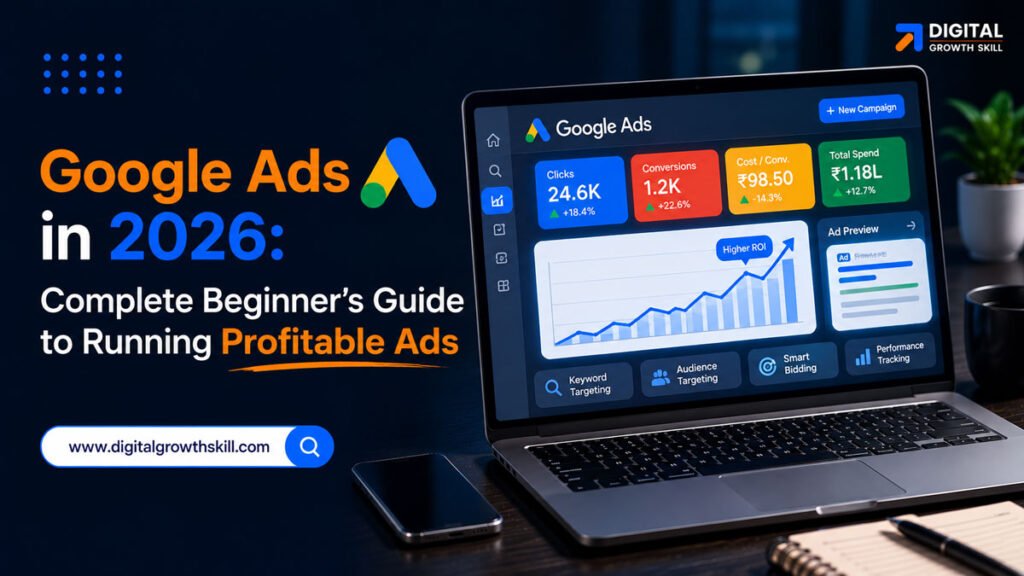
When talking about Google Ads in 2026, this is really a powerful way for businesses to reach people who are actively searching for their products and services. Google Ads allows businesses to appear in front of potential customers at the right time and can generate traffic, leads and sales when campaigns are properly planned.
With AI-powered bidding, improved automation and different campaign types, Google Ads has become easier to manage but also requires a clear strategy. Understanding your audience, keywords, budget, conversion tracking and campaign goals is important for creating profitable advertising campaigns. Google says Smart Bidding uses AI to optimize bids for conversions or conversion value at auction time.
Advantages of Google Ads
- Faster visibility in Google Search
- Targeted website traffic
- More leads and sales opportunities
- Flexible advertising budgets
- AI-powered campaign optimization
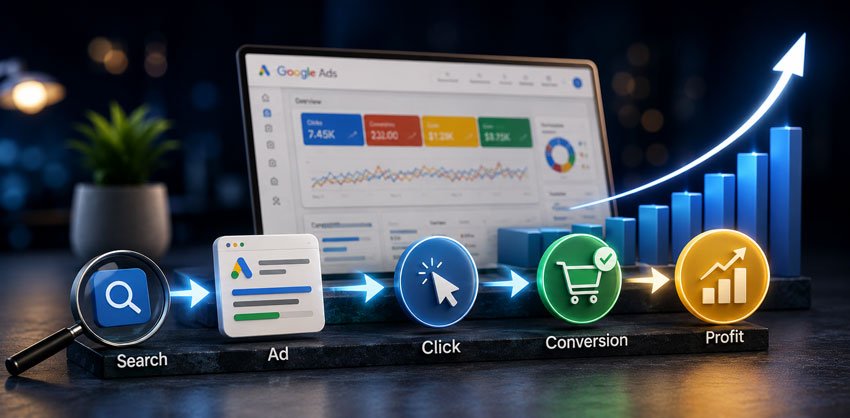
Below are the best ways to run profitable Google Ads campaigns in 2026 & beyond –
1. Choose the Right Campaign Goal
Before creating a Google Ads campaign, decide what you want to achieve. Your goal could be generating leads, increasing sales, getting phone calls or driving relevant traffic to your website.
Selecting a clear objective helps you choose the right campaign type, conversion goals and bidding strategy. Google recommends aligning your bidding strategy with your main business goal, such as maximizing conversions or conversion value.
2. Research the Right Keywords
Keyword research is one of the most important parts of a successful Google Ads campaign. Choose keywords that match what your potential customers are actually searching for and are closely connected to your product or service.
Avoid spending your entire budget on broad and irrelevant searches. Use relevant keyword themes, review search terms regularly and add negative keywords when necessary. This can help reduce unwanted clicks and improve the quality of your traffic.
3. Create Relevant and Compelling Ads
Your advertisements should clearly explain why someone should choose your business. Include your main service or product, an important benefit and a strong call to action in your ad copy.
Create multiple relevant headlines and descriptions so Google can test different combinations. Your ad message should also match the landing page users reach after clicking, creating a consistent experience from search to conversion.
4. Use AI-Powered Bidding and Automation
Google Ads increasingly uses AI to optimize campaigns. Smart Bidding can adjust bids for individual auctions based on signals such as device, location, time and other contextual information.
Depending on your objective, strategies such as Maximize Conversions, Target CPA, Maximize Conversion Value and Target ROAS can help optimize campaigns toward conversions or conversion value. Google updated the naming of some Smart Bidding strategies in June 2026, while the underlying bidding behavior remained the same.
5. Track Conversions and Optimize Regularly
Running Google Ads without tracking conversions makes it difficult to understand whether your advertising budget is generating business results. Set up accurate conversion tracking for actions such as purchases, forms, calls or other valuable customer actions.
Review your campaign performance regularly and analyze clicks, conversions, cost per conversion and conversion value. Use this information to improve keywords, ads, landing pages and bidding strategies over time. Google recommends accurate conversion data as an important part of setting up Smart Bidding successfully.
Why Businesses Have to Use Google Ads in 2026
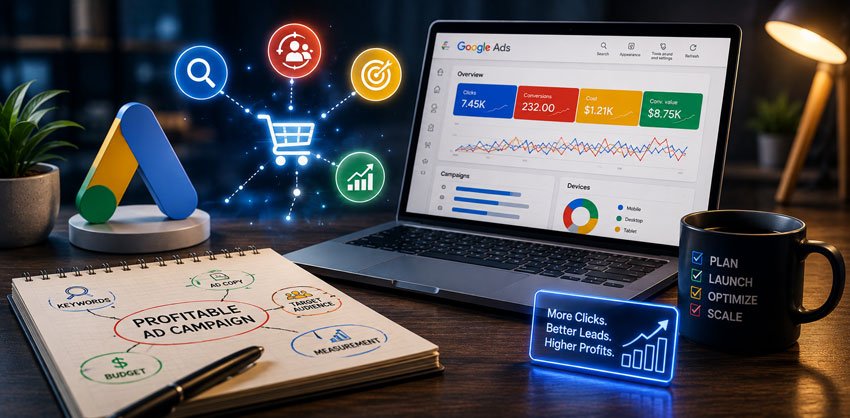
Google Ads gives businesses an opportunity to reach customers who are already searching for products, services and solutions. Unlike some forms of advertising that depend on interrupting users, Search campaigns can connect businesses with people who have active intent.
AI-powered features are also making campaign management more automated. Performance Max, for example, uses Google AI across bidding, budget optimization, audiences, creatives and other areas to help advertisers reach customers across Google’s inventory.
Conclusion
Google Ads in 2026 can be a powerful marketing channel for businesses that use the right strategy. Choosing clear campaign goals, researching relevant keywords, creating strong advertisements and tracking conversions can help businesses make better use of their advertising budgets.
AI and automation can make campaign optimization easier, but profitable advertising still requires good targeting, relevant offers, strong landing pages and regular performance analysis. Businesses that combine Google’s automation with effective marketing strategy can create more efficient campaigns and better opportunities for growth.
FAQ
Q1. Is Google Ads profitable in 2026?
Yes. Google Ads can be profitable when campaigns target relevant searches, use appropriate budgets and bidding strategies, and track valuable conversions.
Q2. How much should a beginner spend on Google Ads?
There is no fixed budget for every business. Start with an amount you can comfortably test and optimize based on conversion data and your target cost per lead or sale.
Q3. Which Google Ads bidding strategy is best for beginners?
It depends on the campaign goal and available conversion data. Maximize Conversions can be suitable when the main objective is generating conversions, while value-based strategies can be useful when conversion values are accurately tracked.
Q4. Is keyword research still important for Google Ads?
Yes. Relevant keywords help connect your advertisements with searches related to your products and services, although Google’s AI-powered matching and bidding systems now play a larger role in campaign optimization.
Q5. Can AI run Google Ads automatically?
AI can automate many parts of Google Ads, including bidding and campaign optimization. However, advertisers still need to provide accurate goals, conversion data, creative assets and business information and regularly review performance.